Skip links

Technology · Mechanical stackers

Mechanical stackers

Two- to six-level parking lifts with steel platforms, hydraulic or electromechanical drives and integrated safety locks. They multiply the number of parking spaces in the same footprint.

01 — Overview

More stalls in the same floor area

Mechanical stackers are especially effective when:

  • Floor area is fixed but more stalls are needed
  • You want a simple, visible mechanical solution, with no robotics or shuttles
  • The garage has enough clear height for vehicles stacked vertically

Key characteristics

  • 2 to 6 parking levels per bay
  • Hydraulic or screw-driven lifts with mechanical safety locking
  • Configurable for sedans, SUVs and light pickups, subject to height and load
  • Indoor or outdoor use with suitable finishes and enclosures
  • EV-ready designs with power and conduit for chargers on one or both levels

02 — Systems

Independent or dependent?

Mechanical stackers come in two configurations. The difference is whether each driver can reach their car without moving another one.

Choose an independent stacker where people come and go at any time: residents, visitors, staff parking and unstaffed garages. It costs slightly more per stall and often needs more clear height. Choose a dependent stacker where the two cars are paired or a valet moves them: one household, staff-only areas or attended parking. It costs less per stall and often fits tighter heights.

System 1 of 2

Independent stackers

Independent mechanical stackers are compact parking lifts that let each vehicle enter and exit without moving the other car. Hydraulic or electromechanical lifts with integrated safety locks create a second parking level in the same footprint, while daily use stays simple for regular drivers.

Best for

  • Full user independence: come and go at any time
  • High turnover: mixed-use, office and visitor parking
  • Retrofit-friendly densification of existing garages
  • Flexible stall assignment: each position can be leased or sold

How it works, step by step

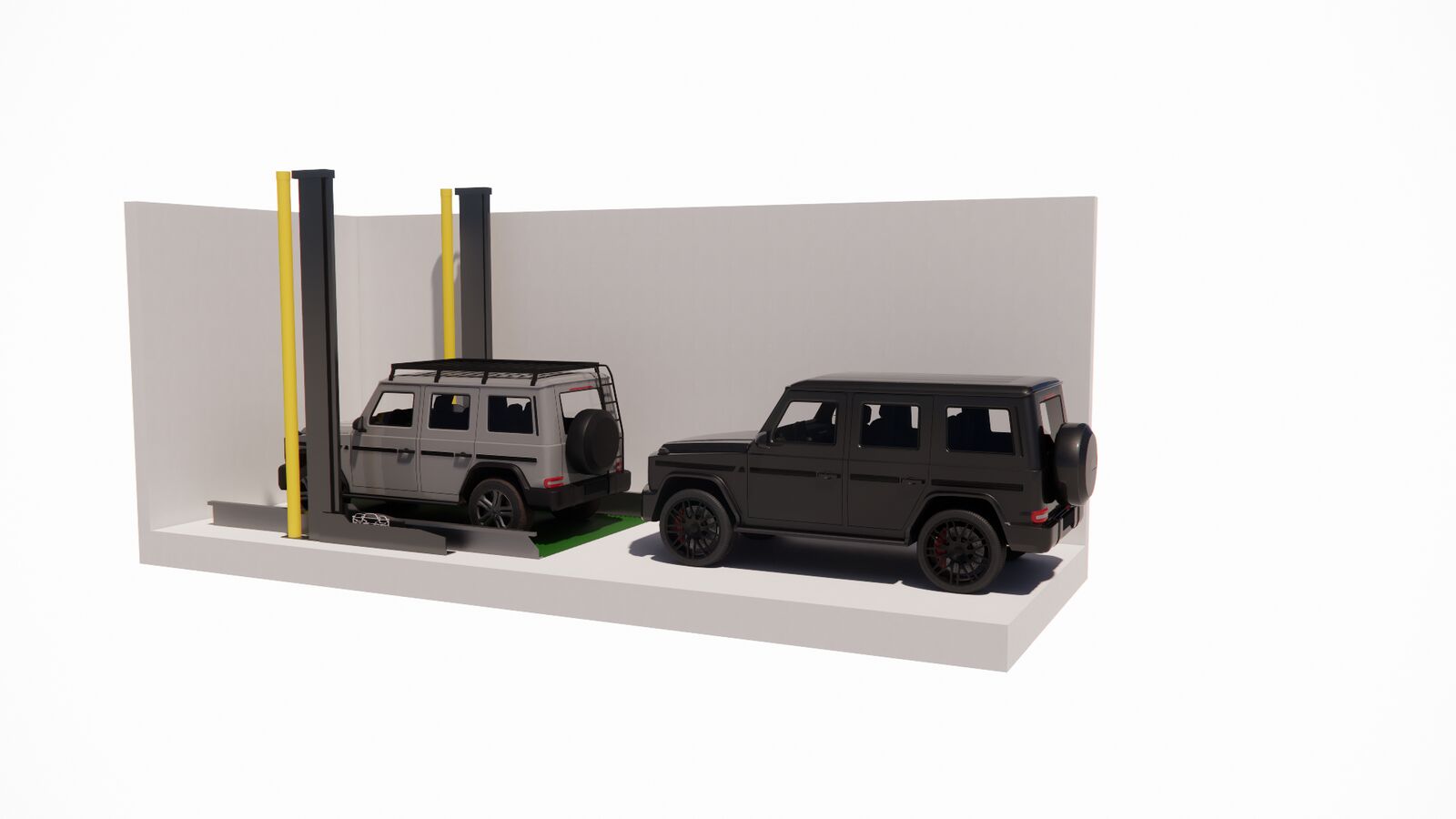
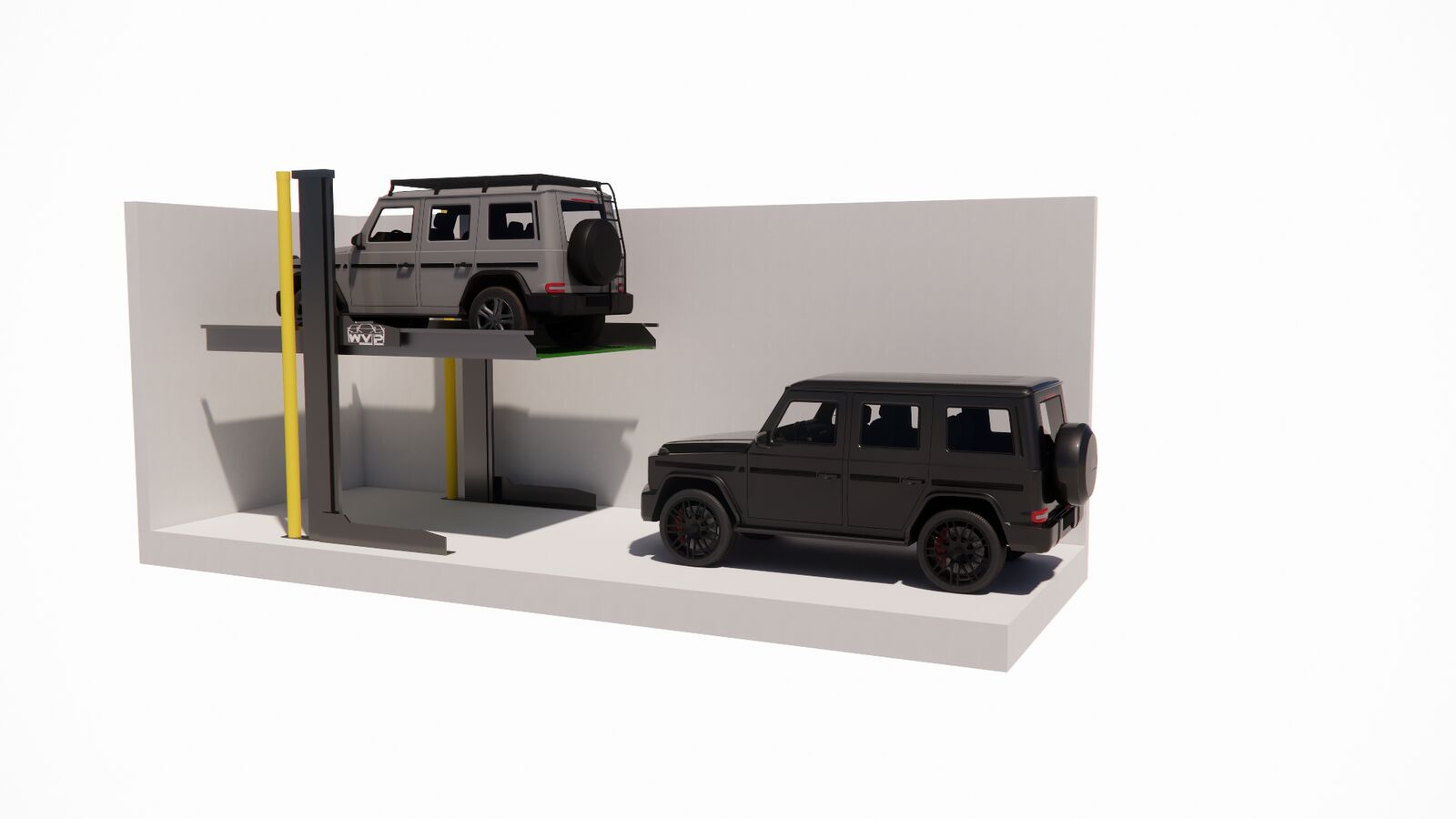
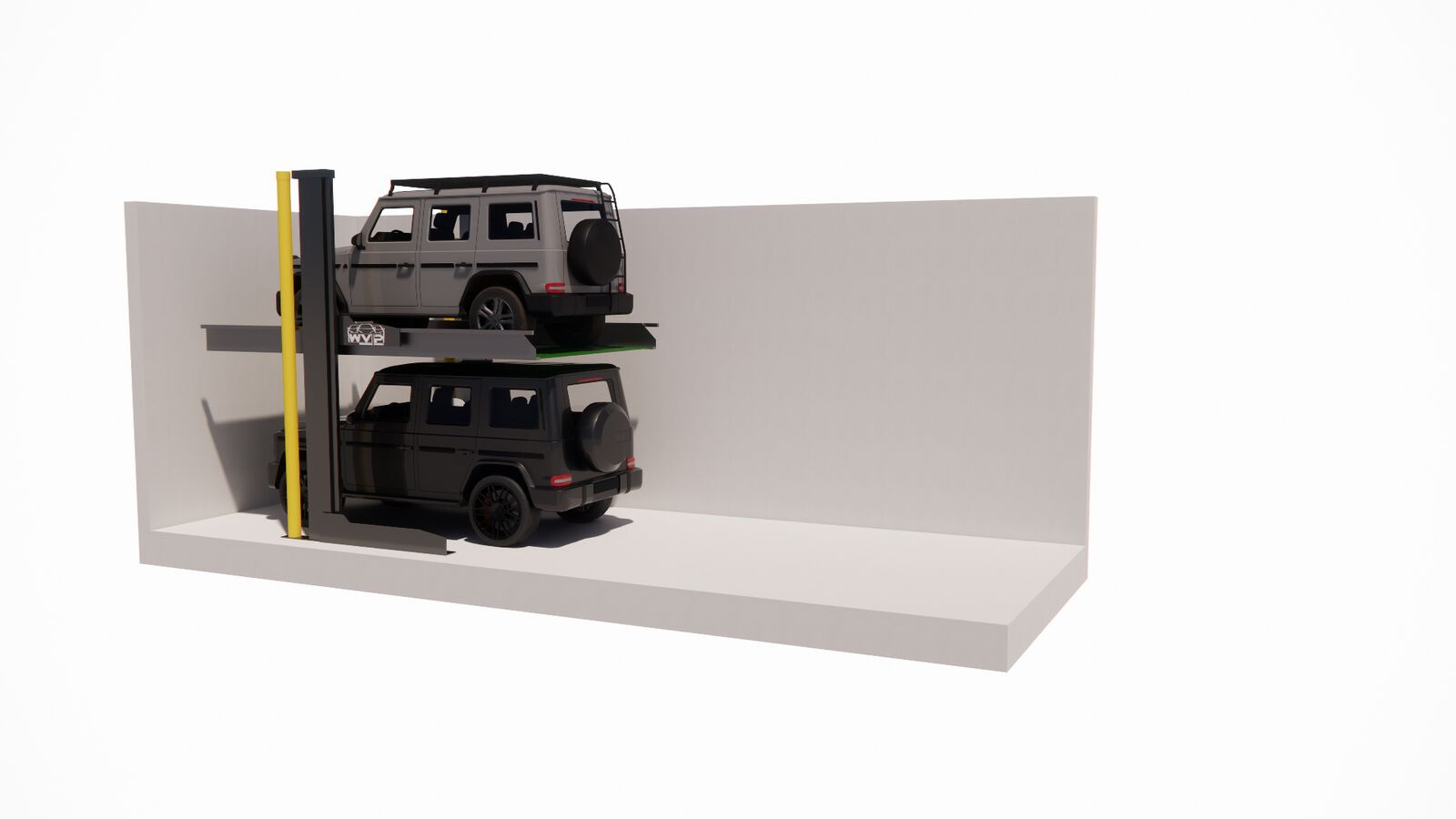
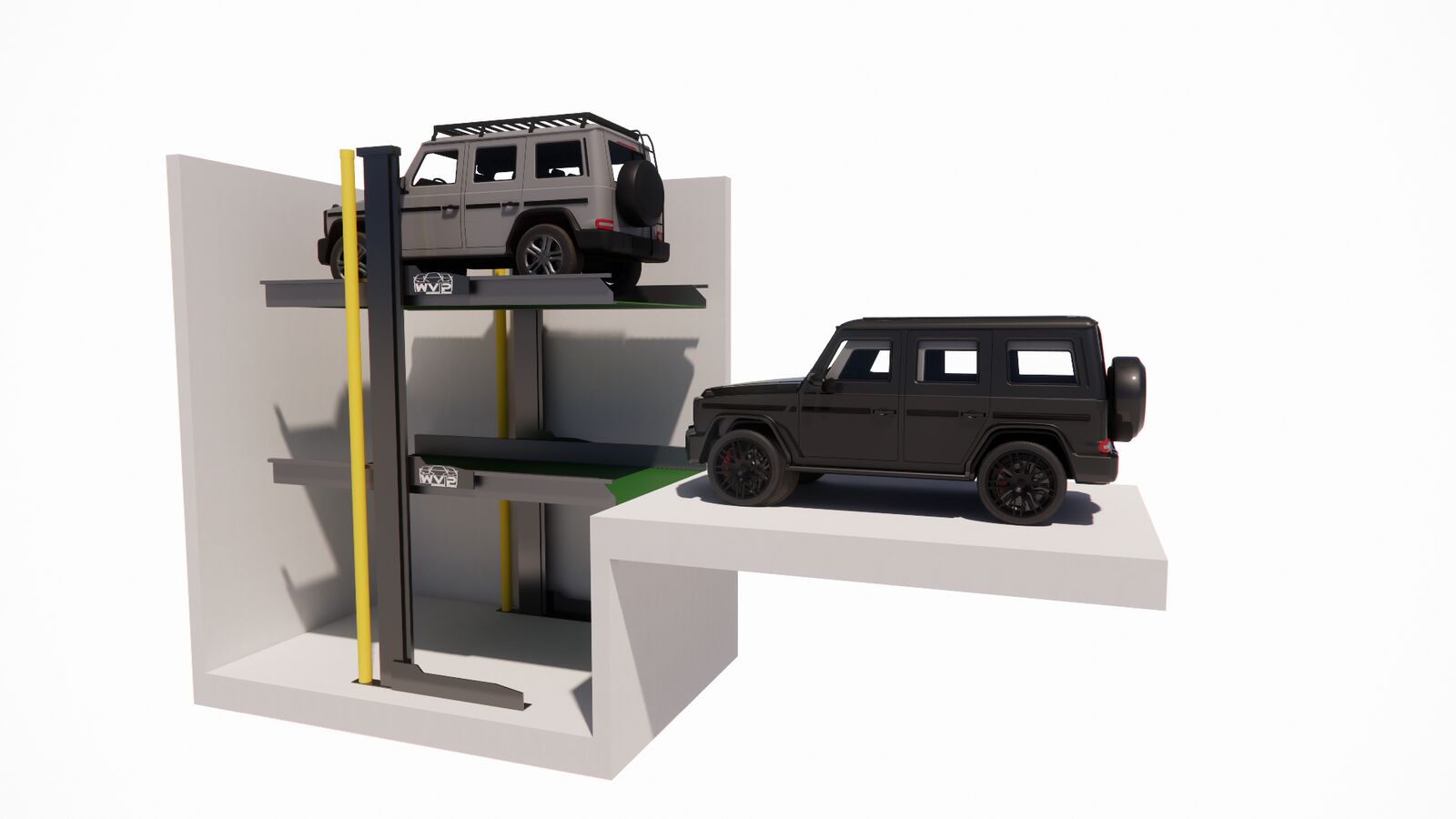
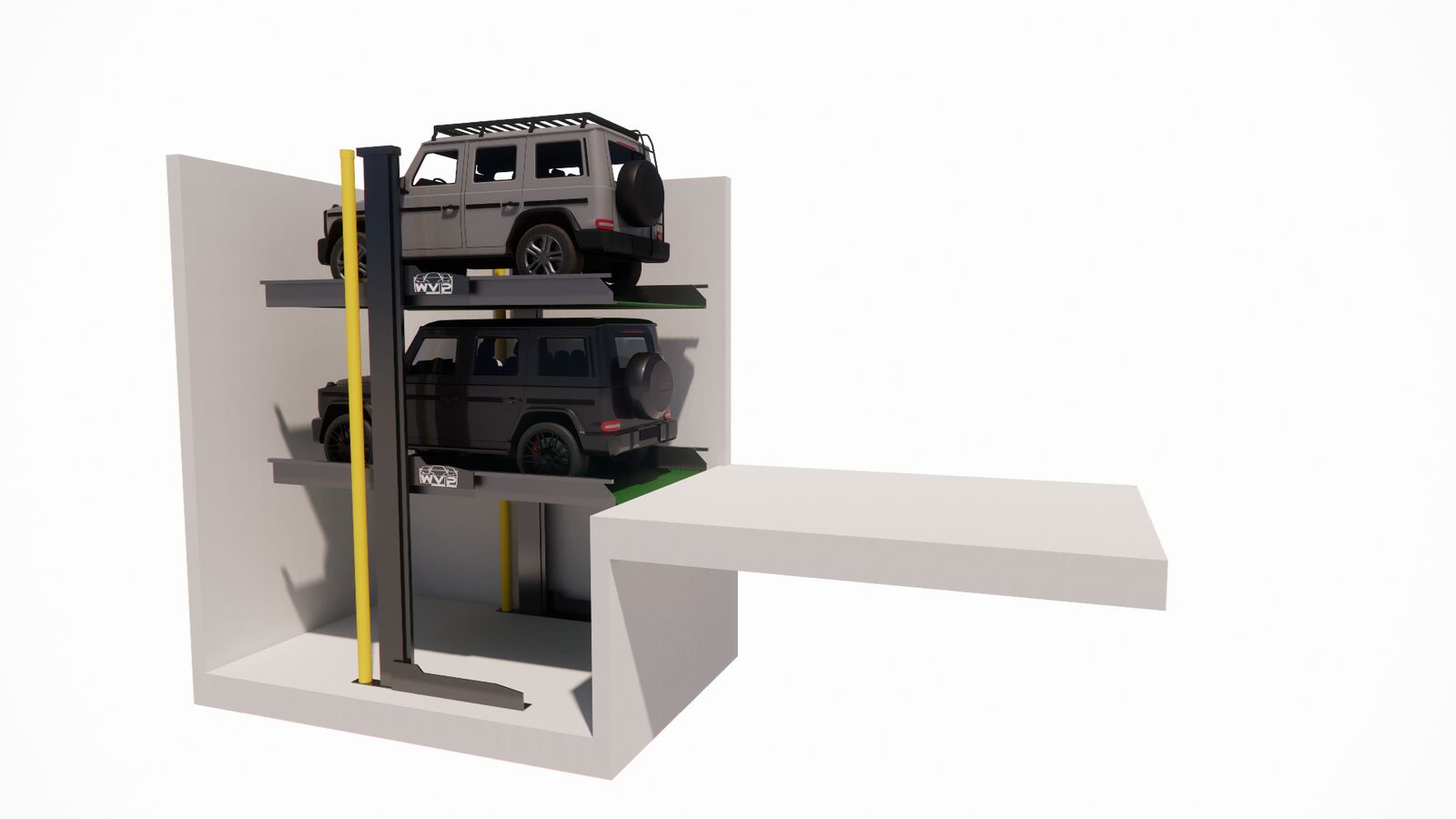
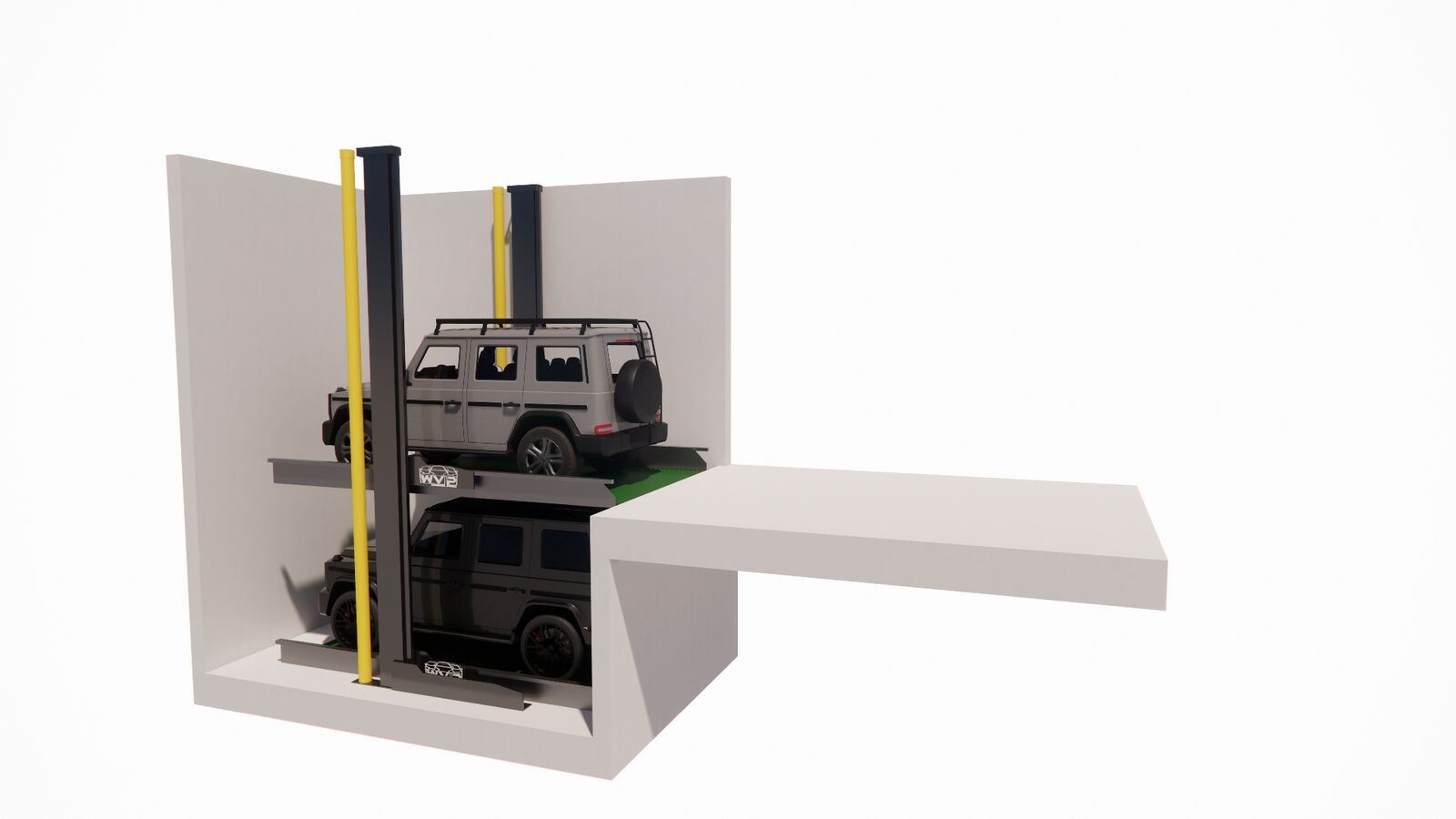
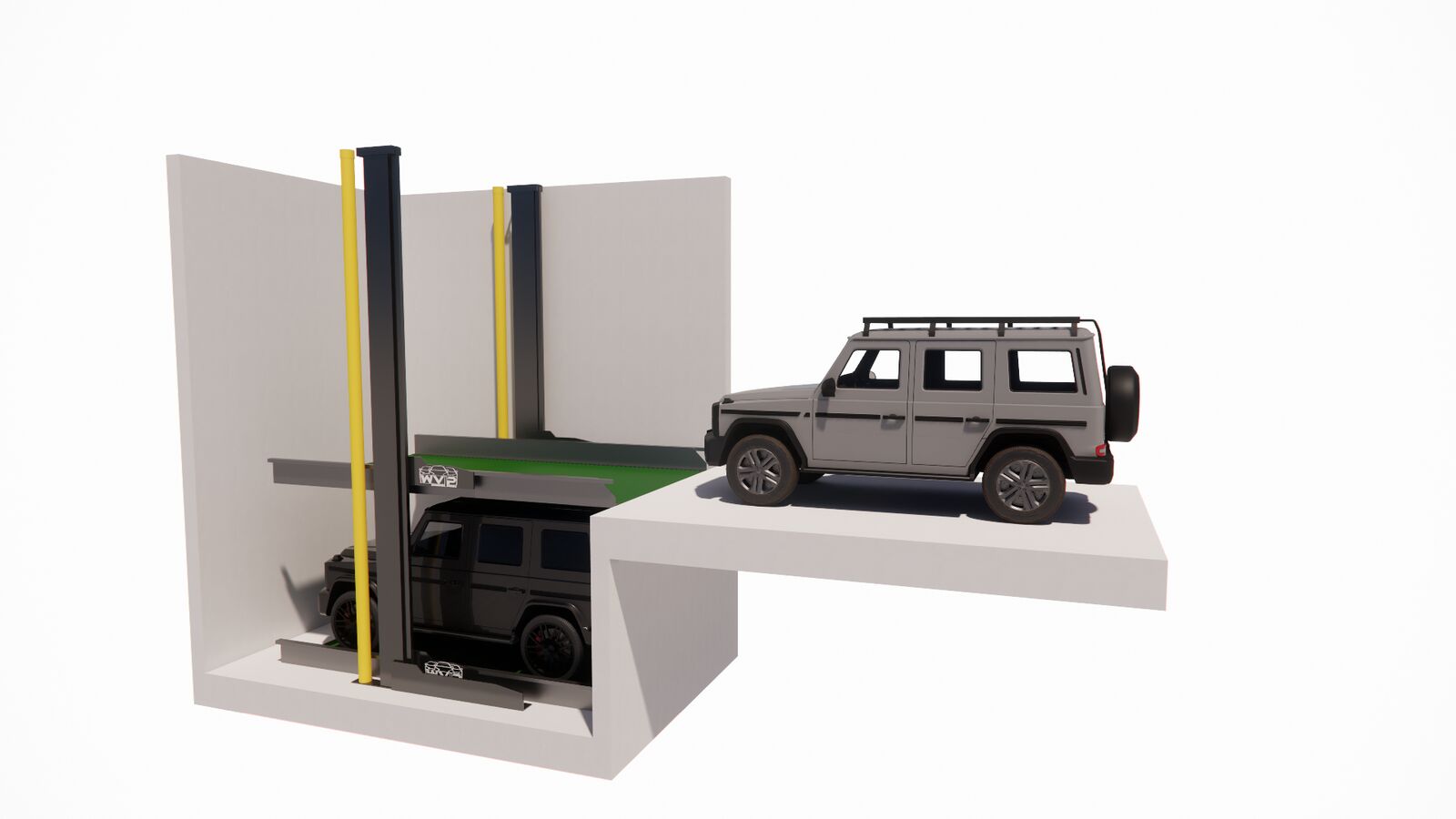
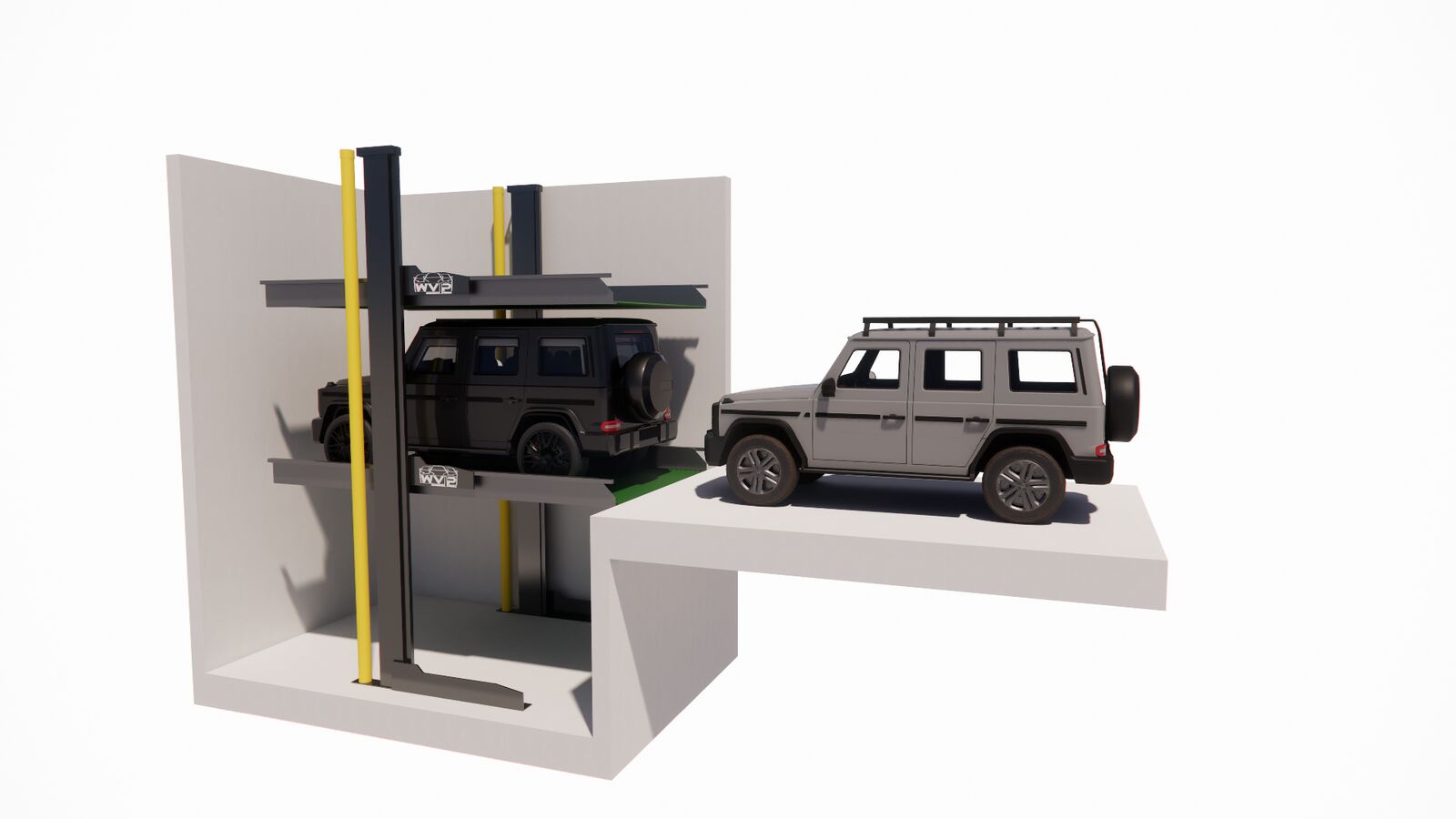
Independent stacker step 1: Arrive and identifyIndependent stacker step 2: Park on the platformIndependent stacker step 3: Lift cycleIndependent stacker step 4: Another car is calledIndependent stacker step 5: Ready again
Independent stacker
01of 05

Arrive and identify

The driver pulls into the assigned bay and authenticates with a key, fob, PIN or app.

Park on the platform

Sensors confirm the zone is clear; the driver parks at entry level and walks out.

Lift cycle

The platforms move to their target positions and lock mechanically.

Another car is called

Any other car can be brought to entry level and driven out, without moving yours.

Ready again

The system resets to ready. No driver has to move their car for you to reach yours.

Or pick a step.
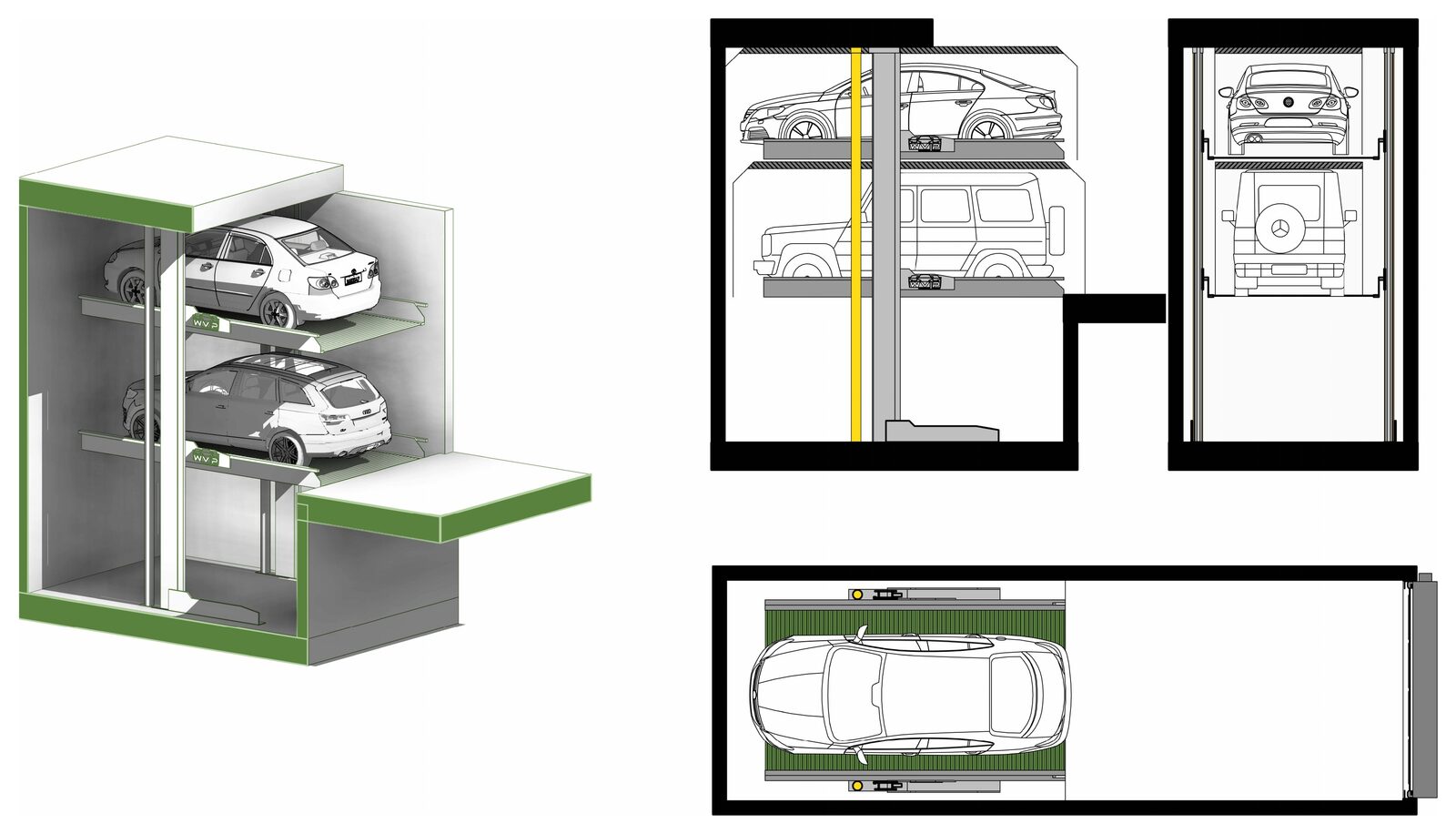
Technical drawings

Plan, section and 3D view of a typical layout. Every system is sized to your site, so final dimensions are confirmed during design.

  • Vehicles: sedans, SUVs and light pickups (subject to clearances and load)
  • Load: up to about 2.0–2.7 tonnes per platform
  • Clear height for two platforms: typically about 3.4–3.8 m
  • Drive: hydraulic or electromechanical, with mechanical safety locks
  • Controls: key switch, PIN pad, RFID or remote; optional app, LPR or access-control integration
  • Safety: locks at multiple positions, pressure and position sensors, over-travel protection, emergency stop
  • Options: indoor or outdoor, EV-ready platforms, pit versions, asymmetric heights

Typical ranges. Final values are project-specific.

System 2 of 2

Dependent stackers

Dependent mechanical stackers are compact parking lifts for paired or valet-style use: the upper car depends on the lower car being moved first. They deliver very high space efficiency at a lower cost per stall, wherever users, building staff or valets can coordinate.

Best for

  • Keeping the cost per stall as low as possible
  • Coordinated users: two cars from one household or office
  • Valet or attended parking, fleets and staff-only areas
  • Walls and dead corners where normal stalls are underused

How it works, step by step

Dependent stacker step 1: Park on the platformDependent stacker step 2: Platform risesDependent stacker step 3: Second car parks below
Dependent stacker
01of 03

Park on the platform

With the lower area clear, the first car drives onto the platform at floor level.

Platform rises

The platform lifts the car to the upper position and locks.

Second car parks below

The second car parks underneath. To take out the upper car, the lower car leaves first.

Or pick a step.
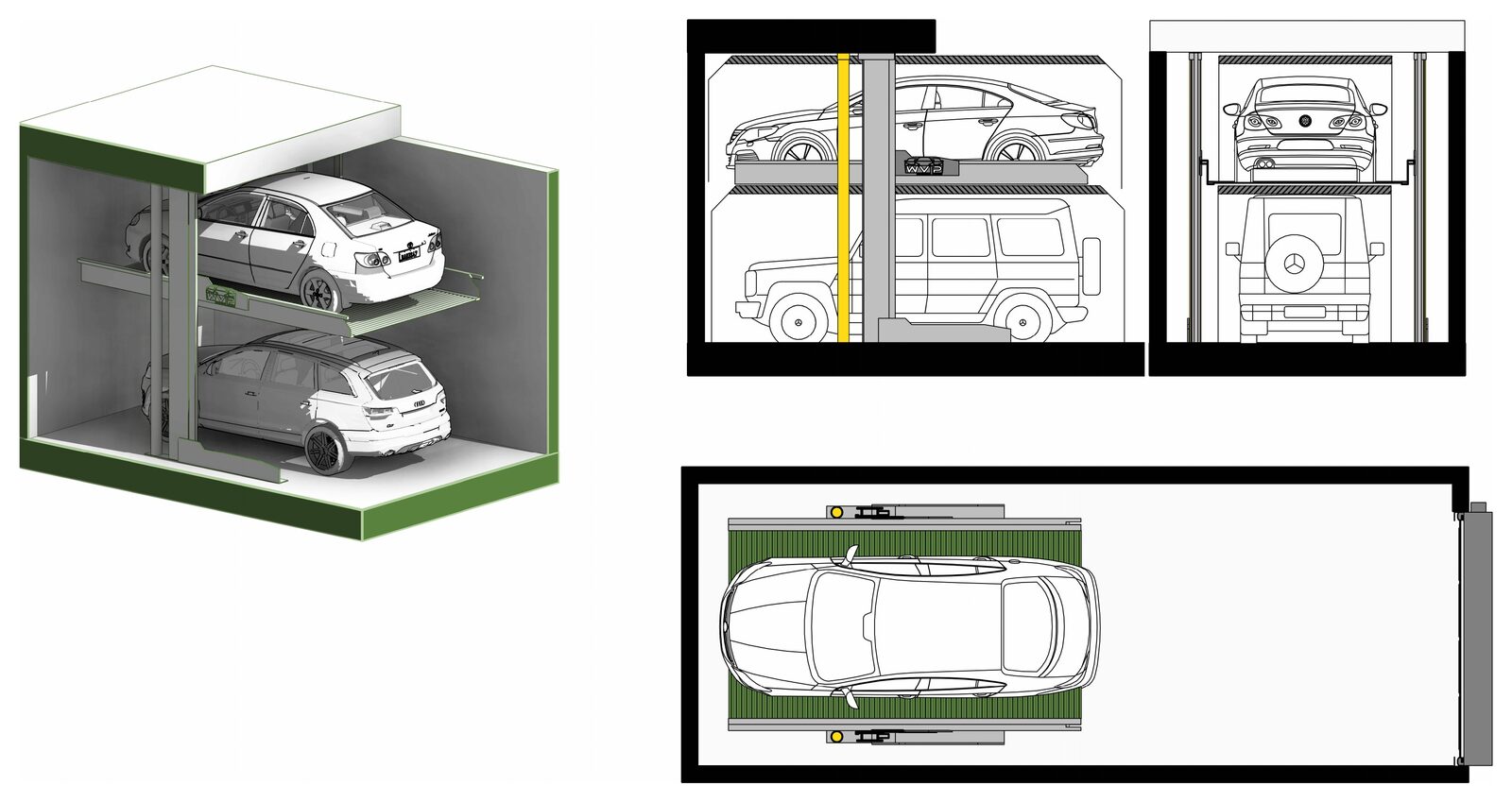
Technical drawings

Plan, section and 3D view of a typical layout. Every system is sized to your site, so final dimensions are confirmed during design.

  • Vehicles: sedans and SUVs; larger vehicles with suitable clearances
  • Load: often in the 2.0–2.7 tonne range
  • Clear height: often slightly less than independent systems for the same vehicles
  • Drive: hydraulic or electromechanical lift with mechanical locking
  • Interlocks: no movement while a car is detected in the lower position
  • Safety: locks at multiple heights, anti-fall protection, presence sensors, optional gates
  • Options: tandem household, valet, linear or cluster layouts, EV-ready lower positions

Typical ranges. Final values are project-specific.

03 — Key figures

Stackers at a glance

2 to 6 levels per bay

Cars stack vertically in the footprint of a single stall.

About 2.0–2.7 t per platform

Sized for sedans, SUVs and light pickups.

Hydraulic or electromechanical

Proven drives with integrated safety locks on every platform.

EV ready

Charging can be added on one or both levels.